With the enforcement of the Public Order Act, public displays of resistance in Singapore have been restricted to peaceful, state-supervised events at areas such as Hong Lim Park, a designated area of protest. The Public Order Act regulates the conduct of individuals and groups when they are in public. At the nexus upon which LGBTQ+ resistance manifests, various issues have been widely contested. These include:
Section 377A of the Penal Code which criminalises consensual sex between men.
Section 12 of the Women’s Charter titled “Avoidance of Same-Sex Marriages” and its consequences – namely intestacy, visitation rights, etc.
Guidelines enacted by the Media Development Authority on representations of “alternative lifestyles” and concurrent governmental censorship of queer content.
Directives sanctioned by the Immigration and Checkpoints Authority that require proof of surgery before transgender individuals can change their gender marker, despite the ambiguous wording of “sex re-assignment procedure” in Section 377(c) of the Penal Code and Section 12(2) of the Women’s Charter.
In manoeuvring through tough laws and social pressures, local LGBTQ+ resistance rests upon the principle of non-confrontation – through art, film, music, events, social media.
Having been a part of this resistance in various ways, most notably when I walked along Singapore’s main shopping district, Orchard Road, with a placard that read “I am trans, will you take a photo with me?”, I too have ostensibly bowed to the principle of non-confrontation. Onlookers had the choice to engage with me or ignore me. It was interesting to watch as people chose to interact with me disapprovingly, their brows furrowed; frowning; giving space. It is only when we claim this space however and the right to exist, whether publicly or otherwise, that resistance draws attention. Consequently, this leads to eventual normalisation.
Singapore’s annual LGBTQ+ rally, Pink Dot, that had begun in 2009 (Photo Credit: The Online Citizen)
Non-confrontational LGBTQ+ resistance however has been mirrored by a conservative backlash, one that has be . The iconic Wear White movement, for example, is one case of counter-resistance to the local pride movement, Pink Dot. This concerted, conservative, effort has sought to preserve the status quo of heteronormativity – a direct response to existing LGBTQ+ resistance in Singapore. Yet LGBTQ+ resistance in Singapore is gaining steam, as demonstrated by the growing size of and support for Pink Dot that gathers annually those who support gay rights, despite recent government intervention that prohibits foreign funding and participation of the event. The growing awareness surrounding queer arts festivals like IndigNation, increasing relevance of support and counselling centres like Oogachaga, as well as widening resources by and for LGBTQ+ individuals in Singapore also testify to this fact. The way that LGBTQ+ resistance has been and is evolving in Singapore means that there will be an ever-increasing number of opportunities for awareness and integration. We have begun to claim our places more visibly, and that is one step towards equality.
Cassandra Thng is a trans activist in Singapore whose personal activist work has been featured by news publications. She is also currently serving as PR director for the Inter-University LGBT Network, and is part of the transgendersg.com team. She is attempting to join queer women’s group Sayoni in the upcoming CEDAW cycle.
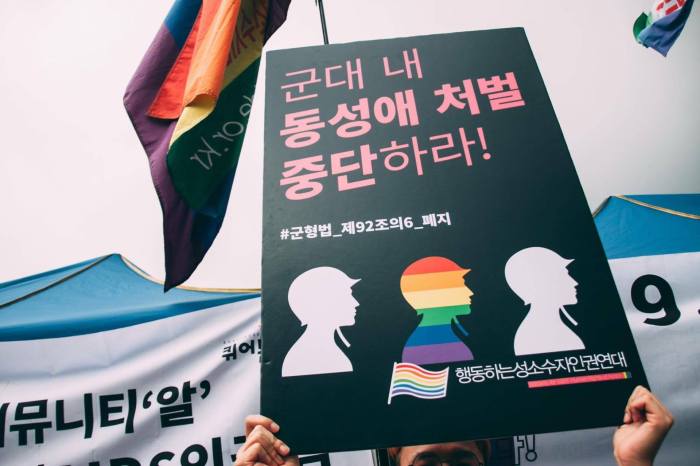
LGBTQ activist holding a sign to protest against the anti-LGBTQ law in Korean military Photo by Kim Min Soo & Korea Queer Culture Festival
Written by Heezy Yang, South Korean LGBTQ artist and activist
Even though South Korea has become a culturally very influential Asian country (in such a short period of time with the rise of K-pop and its entertainment industry in general, as well as its economic growth), non-native South Koreans outside South Korea are often only able to access limited bits of the country’s culture due to the language barrier and South Korea’s unfamiliarity with foreigners. South Korea’s LGBTQ culture is especially something that is hardly exposed to people all around the world. As an English-speaking South Korean who’s been fairly active in South Korea’s LGBTQ scene and movement, I get asked a lot of questions by foreign academics and I receive interview requests from media. Something that I can assure you is that South Korea does have a rapidly-growing and unique LGBTQ culture and that behind it there are many hard-working LGBTQ activists. Through this article, I would like to share my knowledge and experiences regarding LGBTQ activism in South Korea. This article will be presented through specific categories which will aim to deepen the reader’s understanding regarding this topic.
Tens of thousands of people marching in a Seoul Pride parade Photo by Heezy Yang
Korea Queer Culture Festival (Seoul Pride)
Korea Queer Culture Festival (also known as Seoul Pride) is the most visible form of South Korea’s LGBTQ activism. The festival started back in 2000, with 50 participants. I attended the festival for the first time in 2011 and I remember seeing a couple of thousand people participating in the parade. This year, at the 18th festival, over 85,000 people gathered for the show and the parade. Because LGBTQ people are socially and politically still not accepted in South Korea, the festival faces many obstacles and interruptions by religious groups and the government (in a subtle but effective way) in the process of organising, every year. There are hundreds of stalls, performances and fun music to dance to at the festival, but according to people who have been to pride parades in western countries, the atmosphere is very different because the Korea Queer Culture Festival is not commercial at all (the festival financially completely depends on donation) and it still feels like a protest and a statement rather than just a festival. Over the last few years, I have seen more and more straight allies attending the event and also families bringing their kids to show them what acceptance and diversity are.
Note: The size is much smaller but Daegu (a city located in the south of South Korea) has been holding a Queer Culture Festival since 1999. Busan (Korea’s second largest city) and Jeju (an island province with a population of 600,000) are planning to have their first Queer Culture Festival later this year as well.
Politics
2017 has been a memorable year for LGBTQ people in South Korean politics. The presidential election was held in May and one of the five major presidential candidates, Sim Sang-jung, supported LGBTQ rights openly during her campaign. Also, for the first time, homosexuality was mentioned during a live television presidential debate. However, LGBTQ people were enraged and frustrated by what was said by then-most-popular candidate and current president Moon Jae-In. When Moon was asked whether he opposed homosexuality by conservative candidate Hong Jun-pyo, he replied “I oppose”. Moon was a liberal candidate and former human rights lawyer. Many see these kinds of anti-LGBTQ speeches of politicians as a result of powerful Christian influence in politics. Christianity is the most popular religion in South Korea and their powerful lobby has been stopping politicians from passing an anti-discrimination law. Sim Sang-jung’s support toward LGBTQ as a major presidential candidate was welcomed by the South Korean LGBTQ community and Moon Jae-In had to face a guerrilla protest by LGBTQ activists during his speech at the National Assembly in Seoul, after the television debate.
Lately, the only openly-gay South Korean celebrity Hong Seok-cheon has revealed his interest in running for head of Yongsan-gu district (which has a famous gay neighbourhood in it). He owns a number of restaurants in Yongsan-gu district. Some LGBTQ people support his ambition in hopes of having the very first openly-queer politician, however, many LGBTQ activists are not so supportive of him and there is a reason for that. Earlier this year Hong met former presidential candidate Ahn Hee-jung who originally supported LGBTQ rights publicly and the meeting was shown to the public on Facebook live. Hong said “It is a disadvantage for a politician (in Korea) to support us (LGBTQ people) openly. You are smart so I wonder why you would openly say that (you support sexual minorities) during an interview?……You can withdraw your statement if you think that’d be better for the election. We (Korea’s LGBTQ community) would understand even if you did” to Ahn and Ahn later really did withdraw his support for sexual minorities.
Over 300 protestors gathered up in front of Namdaemun police station and waved rainbow-coloured lanterns on the last day of the protest. Photo by Heezy Yang
Protests
Aside from the previously-mentioned protest against Moon Jae-in which took place during his presidential campaign, there have been many more memorable protests led by LGBTQ activists.
In December of 2014, the Seoul Metropolitan Government had scrapped plans to legislate a human rights charter after protests from homophobic groups. I remember hundreds of people gathered up at the lobby of Seoul City Hall and went on stay-in strike for five days, after the disappointing decision was made by the government. The decision was not overturned, however, the protestors have received an apology from the mayor Park Won-soon.
Korea Queer Culture Festival parade was almost cancelled in 2015 because all the places in Seoul that festival organisers were considering booking for the parade were already booked by Christian groups, with the intention of stopping the parade from taking place. So the festival organisers, without choice, decided to move the parade to a later date, and to another place which was Seoul Plaza. According to the city rules, you can book a place for a gathering as early as one month before the gathering. However Namdaemun police station (Namdaemun police station has authority over part of the parade route near Seoul Plaza) changed the rules for booking the specific date the festival organisers were planning on booking. The police station, out of the blue, announced that they will accept the request of the first person or group that starts queuing up and waiting, 7 days before the booking opens, in front of the police station. Festival organisers went to the police station to be the first in the queue, right after the announcement was made but there were members of Christian groups waiting outside the station, being the first people in the queue. The sudden change of the rules of booking and Christian groups informed about it first have led people to think that the police is in favour of Christian groups. Enraged and frustrated after losing the possibility of booking the date, LGBTQ activists decided to still queue up behind the Christians and turn it into a protest and a statement. During the 7 days of queuing, at least hundreds of LGBTQ people and supporters came by to show their support. There were queers, straight allies, LGBTQ-supportive religious people, teenagers, older people, Koreans, and foreigners among the protestors. And they brought lots of food, water, blankets and other supplies for those who stayed in the queue continuously. On the last night of protest, over 300 protestors gathered up and waved rainbow-coloured lanterns. Eventually the Christian groups succeeded in booking the date, however, the festival organisers appealed to the court and the court decided in favour of the organisers and the parade took place successfully.
There are so many other meaningful protests and campaigns I have heard of or participated in. There were relatively small protests such as the protest against an anti-LGBTQ concert inside a Christian university, and there were bigger ones such as a series of protests against former president Park Geun-hye. LGBTQ activists and allies marched, holding rainbow flags in the rally of over a million Seoul citizens demanding then-president Park Geun-hye to resign in 2016 and 2017 to show people that sexual minorities are also an important part of the country that deserve equal rights.
LGBTQ activists and allies marched, holding rainbow flags and signs in the rally of over a million Seoul citizens demanding then-president Park Geun-hye to resign. Photo by Kim Min Soo
Organisations
While LGBTQ may not be visible enough nor have political power in South Korea, there are so many LGBTQ-related organisations in the country that it’s impossible to keep track of all of them. It seems, to me, a few new organisations are created every week. The problem is that, as far as I know, all of them completely depend on donation from individuals and fundraiser events because the country does not yet have an environment where corporations and groups that have market power can openly support the LGBTQ community and maintain the power at the same time. Below are brief introductions of some of the LGBTQ organisations I am familiar with.
Dding Dong, Haengsungin (Solidarity for LGBT Human Rights of Korea), Jogakbo, Chingusai are among the bigger and well-known organisations. Dding Dong is the first and only LGBTQ youth support centre in Korea that was established in 2014. It offers LGBTQ minors a safe place where they can be fed, educated, and given consultations they need and its activists and staff also run outreach programs regularly. Haengsungin started as ‘LGBT Association of Korean Universities’ in 1997 and changed its name to Haengsungin, which means solidarity of active sexual minorities, in 1998, and has been hosting and/or participating in numerous events and protests. It is hosting a fundraiser show to celebrate its 20th year on the 16th of September. Jogakbo is an organisation that is run by transgenders and for (mainly) transgenders. Its organisers and members have been raising their voices to make transgender issues visible for many years now and their main focus is on providing transgenders a safe space where they can share their experiences and learn how to build a sustainable lifestyle as a transgender. Chingusai (translated as friendship) is a Korean gay men’s human rights group and is one of the oldest LGBTQ rights organisations that was established in 1994.
Logo of LGBTQ Youth Support Centre Dding Dong
There are other organisations that are not the most well-known, biggest mainstream organisations in the scene but are just as important. Open Doors Metropolitan Community Church (formerly Korean Rainbow Christian Fellowship) is an affirming and inclusive church, and the majority of its members are LGBTQ. Its pastors have been foreigners since its foundation, and they offer services in both Korean and English with the help of bilingual church members. LGBTQIA And Allies In Korea is an organisation that started as a Facebook group for English-speaking LGBTQ and allies in Korea and for those who are interested in Korea’s LGBTQ issues. Its main goal is to connect Korea’s LGBTQ community with English-speaking LGBTQ supporters all over the world and bring international support and attention to South Korea.
Media
LGBTQ-related issues are hardly mentioned in mainstream Korean media and if they are, they are usually distorted. For many years, television and online news have been under-reporting the number of participants in the Korea Queer Culture Festival when they have reported news about the festival. Also, when a group of people, who happened to be gay, were arrested for using drugs, the media presented as if they used drugs because they are gay.
Lately, there have been relatively newer, rising, online-based media platforms that have been in favour of the LGBTQ community. Huff Post Korea has ‘Gay Voices’ category and it has been not only translating foreign LGBTQ-related articles to Korean but also writing about the issues specifically that Korea faces. I have been writing about Korea’s LGBTQ issues for Huff Post Korea since I was asked to become their blog writer last year as well. DotFace (also written as .Face) is a liberal, online-based media platform that creates and shares viral videos through social media. Currently, LGBTQ is one of their main focuses along with feminism.
Artwork created by Byun Chun for ISHAP’s safe sex campaigns
Entertainment & Art
Vita Mikju, Kuciia Diamant, More, Bori, and Anessa – these are names of people who have some fabulous things in common. First, they are South Korean drag queens, and second, they have been in the music videos of K-pop singers or bands. Definitely it is drag queens who are leading Korea’s LGBTQ entertainment scene. Most recently in K-pop, two drag queens and a transgender performer starred in mainstream K-pop legend Girls’ Generation’s music video for a song called All Night. Exposure of LGBTQ culture through mainstream K-pop videos and various (drag and other fun) shows hosted in many different regions in Korea has been cheering up and encouraging countless insecure, unconfident, or closeted queer people.
While there’s no doubt that drag queens are dedicated artists that bring fashion, love, and important messages to the stage and to the screen, of course there are different types of talented artists as well. Byun Chun is a gay comic artist who has been creating comics and art for over 10 years now. He has collaborated with ISHAP (Ivan Stop HIV/AIDS Project – ivan is a Korean slang for homosexual) and made comics and posters for their campaigns. He also publishes a new episode of gay comics, every week, on gay men’s online comic site Kkatoon. Kkatoon has 7 artists at the moment. In such a conservative society as South Korea, existence of a website like Kkatoon is very important. By reaching out to closeted and inexperienced people with easily accessible and fun cartoons, the artists let the readers experience LGBTQ experiences they never had.
I strongly believe that art has an important role to play in activism. As an art creator and performer myself, I have been using art to make rather political statements lately. ‘Unjustifiable’ is a performance art piece I have been performing in streets of Seoul since 2015. When I perform it, I sit in a box that says ‘I am gay’ on it with a bunch of stuffed animals in boxes next to me. This performance draws attention to the fact that there are a lot of homeless youth abandoned by their families because of their sexuality. This year, in South Korea, a South Korean soldier was sent to jail for having a consensual gay relation with another soldier and many other queer soldiers are still under investigation. (Same-sex sexual activity is not illegal in South Korea, with the exception of those serving in the military.) Shortly after I heard about the news, I created a poster with an image of soldiers shooting each other and two Korean soldiers kissing, to criticize the society where it is normal for soldiers to kill each other but it is not even legal to love each other.
Me holding a poster I designed, in front of Seoul City Hall Photo by Kim Min Soo & Korea Queer Culture Festival
In this article, I have talked about seven different categories in LGBTQ activism in South Korea based on my own knowledge. Finally, below is a short interview I had with a South Korean LGBTQ activist to also provide you insight from a different perspective.
Interview with Edhi Park
Edhi Park is a transgender, LGBTQ rights activist and entertainer. She previously worked as a member of Korean transgender rights organisation Jogakbo, LGBT youth support centre Dding Dong, and Open Doors Metropolitan Community Church. She participated in every major protest for LGBTQ rights for the last five years and she also hosted various LGBTQ events including Korea Queer Culture Festival.
Edhi Park hosting 2017 Korea Queer Culture Festival
Photo by Kim Min Soo & Korea Queer Culture Festival
Q.Where do you think South Korea is with LGBTQ activism?
A. We are in a time of transition at the moment. As the LGBTQ community in Korea started to raise its voice strongly and become more and more visible, anti-LGBTQ Christians also started to fight back harder and harder. These Christians have so much power in politics, and politicians – including presidents – are so scared that they tiptoe around them with LGBTQ issues. Besides, so many of the people who have the power (to make laws to protect LGBTQ people) are conservative older people who are not educated about LGBTQ people. Younger generations know how to use the internet and other new technologies to learn about new concepts and they are used to accepting them. The older generations with political power, however, are not like that.
Q. What do LGBTQ people in South Korea have to do to achieve equal rights?
A. What we need to do is not win every fight. What we really need to do is keep on being who we are and staying strong. Change takes time and that’s inevitable. Sometimes we may win and sometimes we may lose. Eventually the change will come and the world will be ready to accept us. We simply need to not give up and get through this tough time.
The Queer Asia 2017 conference and film festival was a queertastic, ephemeral event spread over three days, covering queer aspects of and from 25 Asian countries and regions. This was the second run for QA, hosted at SOAS, University of London, yet because the first time was such a hit we added a third day – the Queer Asian Film Festival – allowing more scope for queer Asian explorations. Over the course of those exciting three days, we took interest in Desire – one of our core themes at QA17 – and tried to keep in mind the question: What do queers want?
Of course many of our presenters and other guests wanted to show important activist work, to illustrate queer Asian identities within various fields and dimensions – but what were the overarching desires under which participants connected?
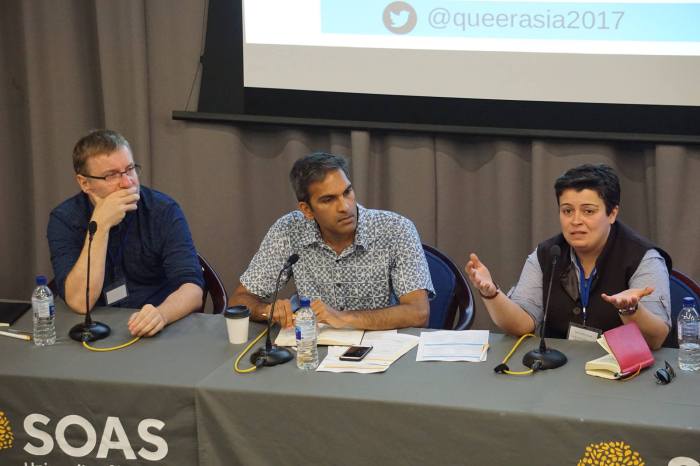
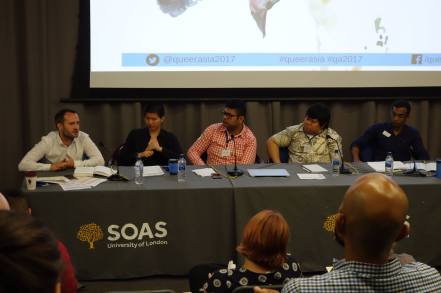
(L to R) Dr. Ben Murtagh, SOAS; Dr. Rahul Rao, SOAS and Dr. Nour Abou-Assab, CTDC
The opening keynote panel of QA17 on Day 1 – “Decolonising Queer Theory” – featured Dr. Nour Abou-Assab, Professor Nikita Dhawan, Dr. Ben Murtagh, and Dr. Rahul Rao, who came together to kick off a discussion on how queer Asian identities in a west-originated and west-dominated academia can be navigated. Dr. Dhawan expressed desire for us to not be distracted by the inadequate term ‘queer’ or categories and label-making, but to maintain the gaze on the post-colonial state, and especially pay attention to subjects who do not have access to the state. Dr. Dhawan spoke of “desubordination” and Decriminalisation (also one of QA17’s core themes) as being extremely important aspects that transcend mere legality. We should want, Dr. Dhawan urged, to support the “sexual subaltern” who do not have the privilege of turning their backs on the state. We should desire thus a “radical politics [that] is located in the realm of civil society.” Dr. Murtagh, in a similar vein, expressed an interest in destabilising categories and viewing queer as a verb – hence we should do rather than categorise. Dr. Murtagh stressed that we should also want to beg the question: Do we even have a right to act as the white western medium? Dr. Abou-Assab presented a desire to unravel the “social fabric” that “has been colonised,” working both within and without academia. Dr. Abou-Assab stated that there was much to learn from both activist and academic communities, acknowledging that sometimes categories are to be rejected but are also useful for mobilising communities.
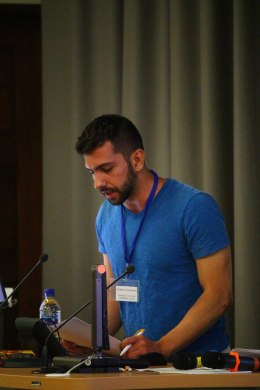
Gabriel Semerene
Due to the concurrent nature of the QA17 panel lineup, it was not possible to view every presentation. Though there was much to observe about what so many queers gathering might want. In Panel 1 (“Beyond the Box – Identity Politics”) Gabriel Semerene’s presentation, titled “Mithlī, mithlak? Language and LGBTQ Activism in the Mašriq,” expressed a desire to pursue a non-west trajectory wherein English was not utilised as an excluder of local political resistances, as well as to reclaim the word ‘shaz’ as ‘queer’ has been in the west. Dushant Patel presented on Club Kali in London, urging that we bypass the conventions of mainstream LGBT clubs and resist disidentification. Patel’s presentation was one of serious utopian aspiration, of world-making without the state. Ahmad Ibrahim’s presentation, “Between Empire and the Modern State – Queer (In)visibility and (In)translatability in Contemporary Bangladesh,” called for a resistance to white western expansionism, addressing the reality of ongoing, contemporary colonialisms. Ibrahim desired a refusal to adopt such narratives as that of medical MTF transitional language, and to imagine an indigenous futurity. This desire also spills into the Queer Archive Bangladesh project, which seeks to archive queer Bangladeshi histories and thoughts for the present, including Hijras and other queer unwanted subjects.
Other presenters expressed a desire for us all to confront racism within queer communities and spaces. For example on Panel 3 (“Appstract Love – New Media/Apps”) Paul Atienza presented “Intimacies and Horizons on the Move: Dating Apps and Ecologies of Desire in Translocal Manila,” demonstrating the idea of “ecologies of desire.” For Atienza the desire was to overcome class obstacles and sexual racisms within gay virtualities, but to also overcome a metro Manila geography of obstacles which hinder intimacies. The overriding drive seemed to be to endeavour to make connections of intimacy. In Chaturawit Thongmuang’s presentation, “Queering Sexuality of Thai Gay Men on the Internet: A Digital Ethnographic Approach,” there was an apparent desire to pursue an identity politics that goes beyond LGBT. Thongmuang reflected an effort to represent the sexuality of Thai gay men within social media space, and the making of histories through forum sex story production.
Panel 5: Sexing Authority – Governance
On Panel 5 (“Sexing Authority – Governance”) Rajorshi Das gave a presentation titled “Nationalism and Queer Intersectionality in Aubrey Menen,” wherein there was a desire put forward to include not only queer Asian communities in Asia but also to queer the Asian diaspora. Ismail Shogo’s “Resistance from the Closet: Queer Politics in the Kingdom of Saudi Arabia” desired more agency for Saudi oppressed LGBTs and desired resistance to the Saudi dynasty’s demonisation of homosexuality. For Shogo, linguistic desires revolve more around change that departs from slurs and which includes a closer translation of the English language ‘homosexual’.
Panel 6 (“Normalising Tendencies – Post/Colonialism”) featured Tamara L. Megaw & Firdhan A Wijaya’s “The challenge of being normal, mapping colonially in psychological academia,” which was particularly poignant when considering what it is that queers want. Megaw and Wijaya expressed desire for safe counselling and educational spaces in Indonesia for queers, adding also that queers and queer discourses needed to disrupt normative and fixed categories of sexuality. Similarly on Panel 8 of Day 2 (“(S)expats and (s)expectations – Migration/Diaspora”) the desires were often more immediate and pragmatic. In Dr. Gerard Coll-Planas’ ““We can’t live together like those German faggots” – Cinematic representation of queer migrants from Muslim-majority countries living in Europe,” the desire expressed was to combat assimilation and, especially for queer migrants, seek protection from racism and “structural xenophobia.” In Tianqi Zhang aka Panda’s “Queer Intersections: Voices from Expatriates and Immigrants Living in Japan,” we were presented with the want to raise visibility for queers in Japan especially through the media of LGBT shows and events, such as the Tokyo Rainbow Pride. Panda showed us how English-speaking queer community groups adapted to globalisation by building queer networks of foreigners and migrant groups in Japan. Massimo Modesti’s “Asian males challenging sexual racism: coping strategies to subvert and reinvent desirability in gay dating” urged us to resist naturalisations of “racial aesthetic hierarchies” and the “it’s just a preference” rationale of gay racism within dating contexts. Again, Modesti posits that the more urgent desire is to decolonise (Decolonisation another of the core QA17 themes) the mind and to resist the trends of “muscle” which cause Filipino suicides. In Ping-Hsuan Wang’s “Coming out of the Country: Migration in gay immigrants’ coming-out stories,” we are encouraged to ask what coming out means to gay immigrants. In particular, how gay immigrants cope with coming out within a place wherein there is no perception of a coming out discourse. The desire herein is to bridge the disconnect for migrants who are gay.
This slideshow requires JavaScript.
And of course queers just wanna have fun, exponential and experimental! Day 1 saw a range of performance and social events. First off was Loo Zihan’s performance lecture “Proscription of Queer Bodies in Singapore,” which most certainly engaged the audience what with Zihan’s charismatic presence as well as the collective guessing of what particular queer objects might be. Following this were drag queen and king performances at our Drag Asia event, followed later by a Queer Asia/Club Kali drag collaboration in the SOAS Junior Common Room. South Korean artivist Heezy Yang aka Hurricane Kimchi provided extravagant song, dance, and humoured information about his activist work, while Chinese Whiskey Chow entertained with an extraordinary performance art piece.
Panel on Decriminalisation and Colonial Legacies
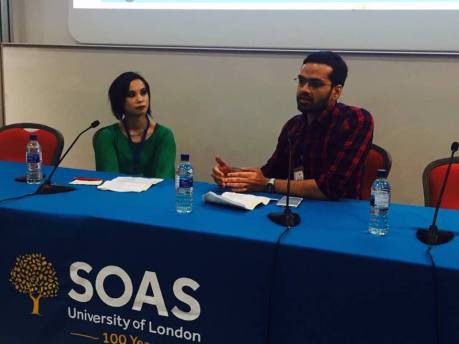
The Day 2 keynote panel, “Decriminalisation and Activism”, included Paul Dillane (Kaleidoscope Trust), Arvind Narrain (ARC International), Yasmin Purba (Arus Pelangi), and Li Maizi (Feminist Activist). Dillane provided extensive information on the UK and other western nations’ efforts to address the effects of colonial-era laws on parts of Asia. Dillane stressed the need to work with (and sometimes take a back seat to) international partners and organisations in advocating for LGBTQ rights. Purba talked about how the situation in Indonesia is worsening, stating: “We used to be under an authoritarian regime, but it was pretty safe for LGBT people.” Narrain spoke positively about losses in South Asian courts experienced by those attempting to repeal colonial law, telling us that “sometimes legal defeats can also be ways that you can change the conversation in society.” Li Maizi explained how the “UN mechanism just doesn’t work in China, [that] international bodies can’t monitor,” instead stressing that “We need to educate our general public. We need to educate the general LGBT community” and that “I need to base [my strategies] on the domestic situation.”
As with in QA16, QA17 also had a “QueerGlossia” event on Day 2 (“QueerGlossia – Perspectives from Vietnam / Vagina Monologues & China”). While Amazin LeThi in “Perspectives from Vietnam” pointed out that the colonial experience for Vietnam was different to many parts of Asia colonised by the British, LeThi told us of Vietnam’s not-so-rosy “Department of Social Evils.” The desire expressed, for LeThi, is for Vietnam to utilise gay tourism, make more use of company power, and to focus on the community. LeThi demonstrated the pioneering potential of Vietnam which has promoted youth- and lesbian-led LGBT movements and film festivals, advocating also for fitting “more comfortably” into ‘queer’ as identity for Asians over ‘LGBT’. Also illustrated was a sense of coming home rather than coming out, and desire to make positive use of a neutral Vietnamese media that is actively interested in publishing on LGBT topics. Esse-Yao Chen, presenting on the Vaginalogues, expressed a desire to evoke mutual understanding via artistic projects, and to ask who we in/exclude when making this art. Chen desires that we ask: “What are we meaning by Chinese women?” and: “Do we exclude those without vaginas?” We were also reminded to be aware that our activism can be co-opted for art purposes.
Amazin LeThi (Left) with Shantanu Singh, QA Committee Member
As with in QA16, QA17 also had a “QueerGlossia” event on Day 2 (“QueerGlossia – Perspectives from Vietnam / Vagina Monologues & China”). While Amazin LeThi in “Perspectives from Vietnam” pointed out that the colonial experience for Vietnam was different to many parts of Asia colonised by the British, LeThi told us of Vietnam’s not-so-rosy “Department of Social Evils.” The desire expressed, for LeThi, is for Vietnam to utilise gay tourism, make more use of company power, and to focus on the community. LeThi demonstrated the pioneering potential of Vietnam which has promoted youth- and lesbian-led LGBT movements and film festivals, advocating also for fitting “more comfortably” into ‘queer’ as identity for Asians over ‘LGBT’.
Also illustrated was a sense of coming home rather than coming out, and desire to make positive use of a neutral Vietnamese media that is actively interested in publishing on LGBT topics. Esse-Yao Chen, presenting on the Vaginalogues, expressed a desire to evoke mutual understanding via artistic projects, and to ask who we in/exclude when making this art. Chen desires that we ask: “What are we meaning by Chinese women?” and: “Do we exclude those without vaginas?” We were also reminded to be aware that our activism can be co-opted for art purposes.
In the Day 2 talk “Feminist and Queer Perspectives in West Asia: Tensions and Complicities” by SOAS’ Prof. Nadje Al Ali, a desire was expressed to pay attention to the lower classes and challenge normativity. We were urged to break out of bracketed sexuality, avoid purist activism, and be clever about money-raising. Similar to what Dr. Abou-Assab discussed about activism and academia, Al Ali also cautioned against discrediting people for producing knowledge outright (academics), but demonstrated a will for more intra-Asian encounters that are key to raising more funds and allowing a greater sense of integrity.
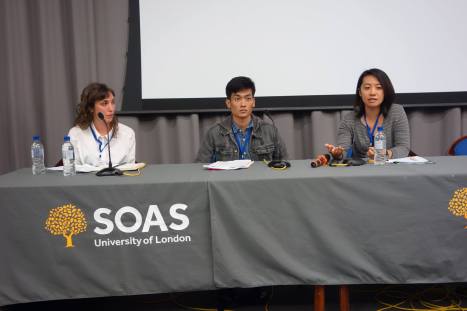
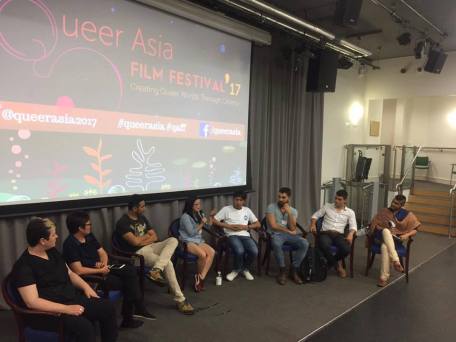
Panel discussion on imagining queer worlds through cinema and countering censorship in Asia
The final day – Day 3 – of QA17 was the Queer Asia Film Festival. The festival featured films from India, Taiwan, Sri Lanka, Lebanon, Myanmar, Singapore, Brunei, China, and films which explored the diaspora and desire outside of Asia in British and Canadian-Filipino contexts. Our closing panel, “Imagining Queer Worlds Through Cinema”, addressed the conference themes of Desire, Decolonisation, and Decriminalization. The panel featured director Susan Thompson, director He Xiaopei, Not Only Voices co-founder and director Gabriel Alves de Faria, director Selim Mourad, documentary filmmaker Joella Cabalu, actor and writer Abdul, and screenwriter and editor Apurva Asrani. Dr. He Xiaopei proposed that we use film to express an understanding of queer versus a normalisation of LGBT movements, while Asrani desired that through film-making we might find our own words and terms to facilitate “self-worth” and queer festival-type events. Cabalu expressed a desire that we do not impose western ideals through film, and it was also suggested that we use our stories as a basis for artistic gesture and not necessarily for pushing or promoting ‘queer’. Cabalu also stated that we might use film to understand how devout Filipino Catholics reconcile with queerness, providing us with the perspective of a cishet-identifying position. The important function of such tools as YouTube was also discussed, with which film makers should shine light on human rights offences and a platform via which viewers could watch queer film safely online. Mourad advocated for a film for a “global everybody,” one that held no particular aim such as festival organising or academic idea, to which it was also added by Zainidi that we advocate for the reactionary, for affect and personal as the political, for progressive art. Particularly poignant was Dr. He Xiaopei’s statement that, through film, we must reignite the class/poverty divide to redress mainstream LGBT discourse and queer elitisms and essentialisms, which in many contexts have hitherto abandoned certain others in the exchange for or pursuit of specific rights.
As with in QA16, QA17 also had a “QueerGlossia” event on Day 2 (“QueerGlossia – Perspectives from Vietnam / Vagina Monologues & China”). While Amazin LeThi in “Perspectives from Vietnam” pointed out that the colonial experience for Vietnam was different to many parts of Asia colonised by the British, LeThi told us of Vietnam’s not-so-rosy “Department of Social Evils.” The desire expressed, for LeThi, is for Vietnam to utilise gay tourism, make more use of company power, and to focus on the community. LeThi demonstrated the pioneering potential of Vietnam which has promoted youth- and lesbian-led LGBT movements and film festivals, advocating also for fitting “more comfortably” into ‘queer’ as identity for Asians over ‘LGBT’.
Queer Asia also featured a special event on legal complexities regarding intersex persons. This Day 2 event “Intersex in the Law: Perspectives” with Hong Kong activist Geoffrey Yeung and Indian Supreme Court lawyer Geeta Luthra demonstrated desires to reeducate activists on the LGBTI acronym and to prevent trans/intersex confusions, willing us to go and witness the work and hear the voices of intersex people rather than rely on second-hand reports. Also desired was an effort to avoid insensitivity to androgyny – especially in the Indian context – and to raise awareness around “pure prejudice at work” and “congenital abnormality” – real grounds for job denial. This related to a desire for qualified doctors who are experienced in dealing with intersex persons in India so as to protect them from the paramilitary forces’ judgements of what – and who – is fit/unfit to serve. We were told that negotiating with the law is to be desired, since it does encourage discourse even when it is backwards, being both that which oppresses and that which empowers. The will should be, we are told, a reversal of oppressive bills and a taking back of bills to parliament for improvement.
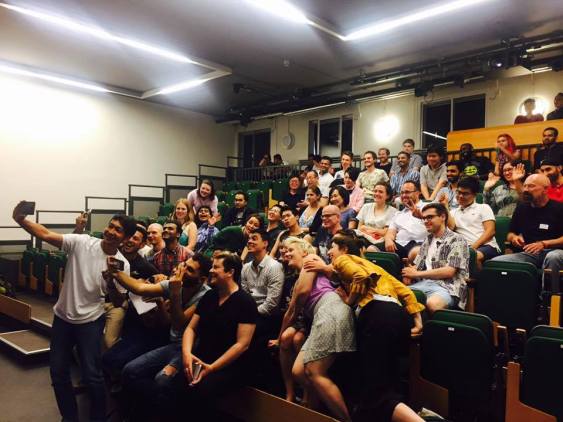
Selfie Time!
—————————————————————————————————————————————–
Written by Allan C Simpson aka Queer Hinny
Allan is a co-founder and committee member of Queer Asia
Although there is no law criminalising homosexuality or same-sex conduct at the national level, except in Aceh province, there are at least 15 discriminatory policies against LGBTI people in Indonesia.
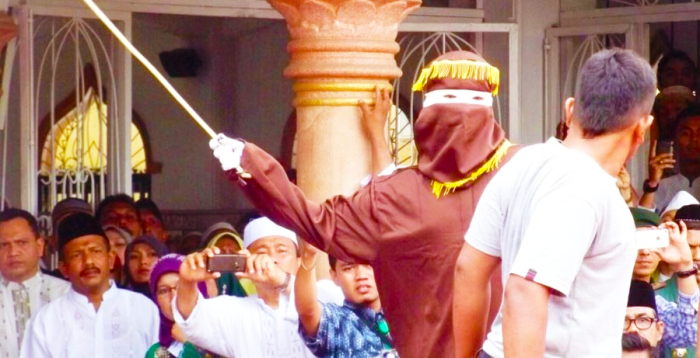
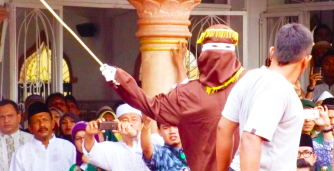
The most severe form of punishment is found in Aceh, a province which has introduced its own Islamic laws, where same-sex sexual relationships are punishable by a sentence of caning (maximum of 100 strokes). In May 2017, two men were caned 83 times each.
Caning of men in Aceh province of Indonesia
The rise of Islamic fundamentalism has played a large role in shaping public opinion and increasing abuse against the LGBTI community, particularly in the last two years. Between January to August 2016 alone, there were 162 abuses of hate speech, forced evictions, dismissal of public events, and assaults against the LGBTI community across various regions.
This number is unprecedented and many of the attacks were incited by extremist Muslim groups. Furthermore, a group of conservative academics and parents’ associations called the AILA (literally ‘The Family Love Alliance’) have been actively campaigning against LGBTI rights.
They have filed a petition at the Constitutional Court pleading the Court to include the criminalisation of homosexuality in the penal code. Simultaneously, representatives from Islamic parties in Parliament are pushing for the inclusion of ‘casual’ sex, including same-sex acts, under punishable acts in the revision of the Penal Code.
Law enforcement in Indonesia has failed to provide adequate protection for LGBTI people, which makes impunity a common practice when it comes to anti-LGBTI violence. Police have taken active roles in cracking down on the LGBTI community: the most recent proof of police-led discriminatory treatment is the police raid on a gym and spa venue in Jakarta, where 141 men were stripped naked and arrested under pornography laws.
Discrimination and violence further marginalise Indonesian LGBTI people into a vulnerable position and poverty. Surveys by Arus Pelangi (‘Rainbow Flow’), the Indonesian Federation of Lesbian, Gay, Bisexual, Transgender, Transsexual, and Intersexual Communities, reveal that 89.3% of Indonesian LGBTI people have experienced violence, while more than 50% live below the national poverty line. Despite being a State Party to almost all key international human rights treaties, the rights of LGBTI people in Indonesia are still far from protected.
This article was originally published on the Study at SOAS blog as a run-up to the ‘Queer’ Asia Conference 2017.
The LGBTQIA+ acronym is important for recognising the diversity of lived experiences and concerns among sexual and gender minorities. However, the “I” in the acronym is still one of the less recognised letters.
In Hong Kong, where I am from, awareness about intersex people has improved in recent years, thanks to a tireless campaign by a local intersex activist, Small Luk (see here and here). As a gay activist in Hong Kong, I have witnessed how her efforts have raised awareness of intersex rights not only among LGBTQIA+ people but also among medical professionals, policymakers and the general public.
Under her guidance, an intersex community is also slowly emerging in the public’s view. Earlier this year, several intersex persons of Chinese ethnicity from Hong Kong, Taiwan, Mainland China and Malaysia came together to form the Chinese Intersex Alliance and published the “Hong Kong Statement 2017” (original in Chinese). This was the first comprehensive statement from the intersex community in this region articulating their stances and recommendations, on issues ranging from pathologisation to discrimination. Moreover, the Hong Kong Statement recognised the cultural intersections where intersex people in this region stand – stating that the community respects both Chinese and Western cultures, but refuses to allow these cultural reasons to be used to violate the human rights of intersex persons. Like other documents such as the Vienna Statement from Europe and the Darlington Statement from Australia and Aotearoa/New Zealand, the Hong Kong Statement is an impressive display of regional intersex advocacy.
However, Hong Kong authorities are slow to catch up. No government official has ever publicly mentioned intersex people. Activists are still advocating for the right for intersex people not to be subject to genital surgeries without their consent. The gender binary remains entrenched in the law and in the sex designations on government-issued identity cards (on legal gender recognition for intersex people, see the 2013 Malta Statement). Comprehensive sex education is rarely implemented, and nearly never covers LGBTQIA+ issues. Not long ago I had conversation with a local medical student during which he argued that “gender is a spectrum but sex is not”.
To change this we must all step up in our support of intersex people and include intersex rights in our politics. And the first step must be to get educated about their stances and demands.
* Geoffrey Yeung is an activist. He recently completed his postgraduate studies at University of Oxford and is currently a Pupil Barrister in Hong Kong.
This article was originally published on the Study at SOAS blog as a run-up to the ‘Queer’ Asia Conference 2017.
There have been significant developments in relation to LGBTQI+ (lesbian, gay, bisexual, transgender, queer, intersex) rights and communities in Asia recently, both negative and positive. Events such as the ban on ‘foreign’ sponsorship and participation at Singapore’s annual Pink Dot rally, the treatment of LGBT individuals in Indonesia (including corporal punishment and humiliation and arrest), and Taiwan’s constitutional court decision to allow same-sex marriage are but a few examples.
These changes have kept debates around Asian sexual orientation and gender identities (‘SOGI’) at the foreground of discussions on ‘LGBTQI’ identity in an Asian context.
The term ‘SOGI’ is sometimes preferred to ‘LGBTQI’ in order to encompass wider communities who may be excluded or harmed in establishing gender equality and sexual rights. This framework is important in the context of many countries in Asia, where people may not identify with the identity framework (‘LGBTQI’) used by other states, NGOs, and international ‘LGBT’ movements. The conference held by ‘Queer’ Asia on 16-18 June 2017 is therefore an exciting new prospect for future research into the complexities of sexual orientation and gender identities in Asia. In particular, the conference is helping to expand definitions and ideas of what it means to be ‘LGBTQI’ in relation to ‘Asian’ identity, where such identity may be negotiated in contexts of social and cultural difference from the west. Secondly, this sort of research inherently changes the nature of our global understanding of ‘LGBTQI’ identity, adding divergent ‘Asian’ perspectives to what it means to be ‘LGBTQI’ and asking how this experience interacts with the rest of the world.
LGBT movements have sought legal acceptance through equal rights, such as legalisation of marriage or equal representation in military service. This adheres more to an assimilationist rather than liberationist style of politics, where the individual is brought within the fold of existing liberal democratic frameworks. Such claims to belong may be seen as problematic since they are based on a heteronormative framework, through which LGBTQI individuals demand their inclusion into rights frameworks, rather than challenging the nature and scope of those frameworks themselves. The Taiwan court’s decision, along with recent moves to approve a bill ensuring ‘gay rights’ in Thailand, can be viewed within this context. An important question therefore emerges: what does decriminalisation and legalisation enable? No one would argue that the endowment of equal rights does not have tangible benefits, but what other impacts occur when one is recognised as a legitimate citizen by the state?
India provides an interesting example of the negotiations that occur between SOGI individuals and the modern nation state, demonstrated by examining acts of decriminalisation, legalisation, and recognition. There have been significant legislative developments in recent years to ensure the social inclusion of SOGI individuals. Sexuality and gender-based movements have flourished since the 1990s, leading to increased visibility and media representation. These movements have drawn on both global discourses on the rights of the sexual and gendered subject (as found in human rights discourses and global treaties), as well as utilising ‘local’ discourses relating to demonstrations of sexual and gender difference, exhibited historically in the South Asian context.
Mainstream activism has focused on the issue of decriminalisation. A historic victory came in the judgment of the Naz Foundation v the Government of NCT of Delhi, 2009, where the Delhi High Court declared Section 377 of the Indian Penal Code constitutionally invalid (a statute that criminalises sexual activity ‘against the order of nature’ and interpreted to criminalise same-sex sexual acts). This judgment effectively decriminalised consensual same-sex conduct between adults. However in December 2013 the Supreme Court overturned the Delhi High Court verdict in Suresh Kumar Koushal & another v Naz Foundation and others, which upheld the constitutional validity of the section. The court argued that ‘homosexuals’ were not targeted as a group by the section and that parliament should decide on legal revision. This judgment is currently awaiting review by the Supreme Court.
In contrast, transgender individuals—as distinct from LGB individuals—have become the focus of government intervention. In April 2014, shortly after the Koushal judgment, a different bench of the Supreme Court distinguished transgender communities as in particular need of rights and protections in National Legal Services Authority (‘NALSA’) v Union of India. The judgment affirmed constitutional rights for transgender communities, although there have been critiques over the definition of ‘transgender’ in the judgment and therefore which groups might fall under its remit. Additionally, further acts have been passed in both the Upper and Lower Houses of the Indian Parliament that have sought to implement the NALSA judgment through practical means, although they vary in scope and remit. The latter act, in particular, has been critiqued for failing to embody the spirit of the NALSA judgment.
Transgender groups in India have become a focus for state discourses, particularly as targets for government intervention in relation to rights. This stems from a historical NGO interest in these groups as the recipients of sexual health and HIV/AIDS initiatives. One limitation of this governmental intervention is the way in which ‘transgender’ identity has been framed, which is problematic in two critical ways. First, individuals may fail to identify with the term ‘transgender’, instead choosing regionally or culturally specific terms. They thus cannot benefit from these legal interventions unless they identify as ‘transgender’, which may mean becoming more visible in legible ways (legible relating to what is expected to ‘pass’ as transgender in the eyes of the state). Second, the distinction between ‘transgender’ and other gender identities draws and creates artificial divisions between gender non-conforming identities (who may fluctuate or identify with different categories in different spaces and at different times). This results in producing division between different groups and creating a more rigid idea of what transgender means. For example, the NALSA judgment conflates ‘transgender’ and ‘hijra’ identity, often using the designation ‘transgender/hijra’ to refer to identified communities (‘hijra’ is a term used to identify gender non-conforming individuals in South Asian countries, although it is rejected as derogatory by some communities in India).
Identifying the ‘transgender’ community as one to whom rights can be given conceptualises ‘transgender’ identity in a particular way, notably as male-to-female transpeople, whose identity is often conflated with that of hijras (who may or may not identify as ‘trans’). This is a limited understanding of trans identity in India, based on western conceptual frameworks which understand trans identities in relation to binary gender identification and medical pathologisation. The entrenching of this definition of transgender identity in India is likely to have negative effects on other forms of transgender and gender non-conforming trans identities in this context, particularly where gender variance may intersect in multiple ways with sexual orientation and sexual practice.
Legislative coherence is liable to divide groups, solidarities, and identities, and make subjects more legible to the state. Aniruddha Dutta argues that the consolidation of gender non-conforming people under a stable identity results in the codification of subjects for ‘care and management’ by the state. This means that while transgender subjects are recognised as rights beneficiaries, a consequence is that they are also rendered more legible to the state as subjects who might be managed more easily. Moreover, the recent benefits afforded to trans communities stand at odds with the legislative and social position of wider ‘LGB’ communities. In June 2016, the Supreme Court clarified that LGB communities were not included in the remit of the NALSA judgment, which does not discuss the factor of sexual orientation and practices. This ignores the ways in which gender identities may overlap with sexual identities in composite and complex ways. As such, multiple LGBT identities face ongoing injustice and criminalisation under Section 377, including trans identities. Fundamental rights granted under NALSA (such as the right to equality, non-discrimination, and protection of life and personal liberty) for trans communities therefore appear contradictory when considering the rights denied by the Koushal verdict that re-criminalised consensual same-sex sexual practices. This paradoxical situation highlights that granting rights based on gender variance and not on sexual orientation puts subjects in a precarious position, especially when they do not fall simply into trans or LGB categories. Simultaneously then, the variance and flexibility exhibited throughout trans and wider LGBT communities is ignored, and policed by the state when it identifies some identities as legal and acceptable.
Examining the current legal and cultural position of LGBT rights in India allows for an exploration of how LGBT rights are negotiated through the historical, social, and political context of individual countries. Rights are not gained as part of a general trajectory towards states of equality, but rather through processes of decriminalisation and legalisation. In this sense, ‘LGBTQI’ rights are negotiated through divergent contexts, which raises problematic and uncertain consequences for SOGI identities across the world.
This article was initially published at the IAPS, University of Nottingham Blog as part of a collaborative series after the ‘Queer’ Asia Conference 2017: Desire, Decriminalisation and Decolonisation.
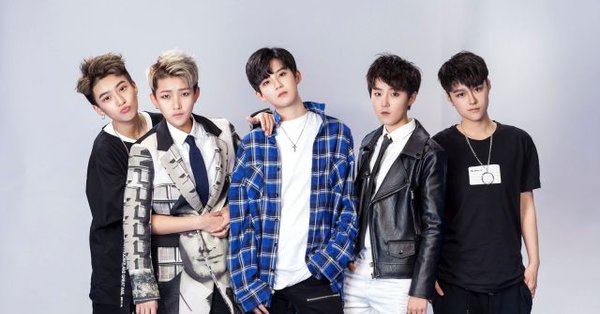
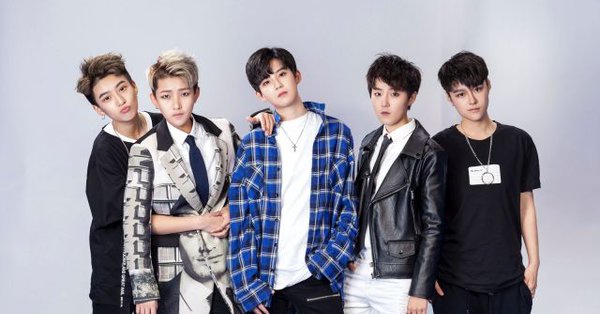
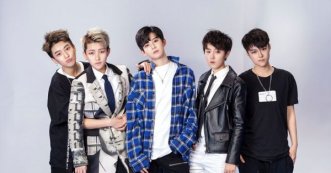
On 28 April 2017, the first single, ‘Action’ (xingdongpai), of the newly formed Chinese pop group FFC-Acrush (Acrush in short) was released in Beijing. In the music video, five androgynous young people dance and sing like K-pop male idols. Yet, long before the song’s release, the band had already sensationalised Chinese cyberspace for their cross-dressing personas in public appearances and promotion. As the first Chinese ‘boyband’ formed by five young, handsome, masculine Chinese girls between 18 and 24 years old, millions of Chinese female fans have gone fanatic for Acrush members’ androgynous beauty, despite their cross-gender impersonation.
This might seem confusing at first glance. The group refers to itself as a ‘boyband’. Its members’ looks and performances are often marketed as good exemplars of female fans’ ‘husbands’ (laogong). Yet, at times, the members emphasise to the media that they are ‘gender-neutral-style’ (zhongxing feng) girls. Meanwhile, during interviews and interactions with their fans, these female idols also often reject gender pronouns and any explicit discussions about their sexual orientations. This ambiguity surrounding the band’s gender and sexuality has attracted global media attention in the past two months. However, the appearance and wide popularity of this band in Mainland China, as well as its ambiguous queer play with female masculinity and homosociality, should not come as a surprise to Chinese audiences.
In mid-2000s’ Japan, there was a famous ‘boyband’, Fudanjuku, comprised of several cross-dressing females who were otaku (people with great interests in anime, cosplay, games, and similar cultures). In early 2010s’ Taiwan, a similar ‘gender-neutral’ music group, Misster, with five tomboyish girls was formed. Acrush’s K-Pop androgynous style might also have been influenced by the Korean cultural wave that has flooded Mainland China since the late 1990s.
More importantly, the Mainland Chinese entertainment industry had already manufactured a number of well-known tomboyish female idols over the last decade, most of whom rose to stardom after the success of the 2005 Chinese reality singing competition show, Super Girl (Hunan Satellite TV, 2004-2006). In its 2005 season, the unexpected popularity of the show’s tomboyish winner, Li Yuchun (Chris Lee), led to a surge of female celebrities with cross-dressing performances and masculine personas in Super Girl and Mainland showbiz in general.
Nevertheless, despite seemingly serving as a feminist or gender-liberating trend, the Mainland’s commercialisation of this ‘gender-neutral’ style might have quite different sociocultural implications than those of the culture of gender neutrality in Hong Kong and Taiwan. Gender-neutrality is often linked to lesbian visibility and queer female subjectivity in Hong Kong and Taiwan’s mainstream societies, both of which have more openly-out celebrities and better sociocultural atmospheres for gender and sexual minorities. For example, the competition for selecting the group members of Misster was held in a lesbian bar in Taipei in 2009, which already divulges the band’s lesbian undertones. The band leader, Anna Dai, is also a famous tomboy lesbian celebrity in Taiwan. In contrast, none of the tomboyish Super Girl celebrities have ever come out of the closet. Some of them have experienced waves of lesbian rumors online, which either were denied by the celebrities’ agents or greatly damaged their music careers.
The kind of female masculinity epitomised by Acrush often represents either a unique form of fashion or beauty, or a distinctive young woman’s personality in a cosmopolitan China. Gender-neutral female celebrities are often expected to combine desirable masculine and feminine gender traits, yet are not self-identified lesbians or queer women. In fact, whenever this style is closely associated with lesbian sexualities in the off-screen world, celebrities will either downplay or deny this ‘abnormal’ possibility. Although their cross-gender personas often invite fans’ queer readings and fantasies, these queer practices are only limited to playful imaginations and do not necessarily reflect any real-world erotic desires or queer identities of either the fans or the celebrities.
In this sense, the commercialised ‘gender-neutral’ phenomenon in Mainland China might suggest a more worrying mainstream cultural trend for LGBTQ groups. By becoming entertaining elements in sensationalised commercial media, the implied gender and sexual nonnormativities in the Mainland ‘gender-neutral’ style have, to a certain extent, already lost any sociocultural and political significance for gender and sexual minorities. During this queer sensationalism of the Mainland entertainment industry, celebrities can ‘perform’ transgressive gender identities and intimacies without seriously disturbing and menacing heteronormative structures in the real world. In other words, all that is related to queer desires and voices becomes a fictional play on screen to entertain the nation.
What underpins Mainland China’s queer sensationalist commercial culture is actually a distinctive Chinese understanding of female masculinity as a gendered continuum instead of as a signifier for queer sexualities. Jack Halberstam famously noted that female masculinity is more tolerated in women’s adolescence stage as a resistant against adulthood in the Western context. Yet, in both the traditional and modern Mainland Chinese contexts, even when produced by and displayed on adult female bodies, certain kinds of masculinity are not necessarily linked to subjects’ lesbianism, but merely mark an ‘aesthetic form’ or a form of ‘political adherence and moral power’. These cultural specificities of Mainland ‘gender-neutrality’ create a hierarchical, discriminatory queer pop culture that legitimises profitable female masculinities. Groups like Acrush do not explicitly unveil the lesbian identities and desires of celebrities and fans in the off-screen world, thereby aggravating the invisible and intelligible existence and unrecognised daily struggles of Mainland Chinese self-identified female gender and sexual minorities.
Jamie J. Zhaois currently a PhD student in Film and TV Studies at the University of Warwick, UK. She holds another doctoral degree in Gender Studies from Chinese University of Hong Kong. Her research spans a wide array of topics on Chinese queer entertainment, celebrity culture, and public culture. Her most recent publication can be found in the volume she co-edited with Maud Lavin and Ling Yang, ‘Boys’ Love, Cosplay, and Androgynous Idols: Queer Fan Cultures in Mainland China, Hong Kong, and Taiwan (HKUP, 2017)’.
This article was initially published at the IAPS, University of Nottingham Blog as part of a collaborative series after the ‘Queer’ Asia Conference 2017: Desire, Decriminalisation and Decolonisation.
‘Queer’ Asia blogs present perspectives on LGBTQ+ issue in Asia. Our contributers include artists, activists and academics working on LGBTQ+ issues in Asia or Asian diasporas. If you wish to contribute to our blog, please write to us at queerasia@gmail.com.
Fire up Grindr, Hornet or Jackd, among the other gay social applications in Malaysia, and notice a commonality. For the privileged Asian men, white migrants, or tourists, scrolling through the grids of profiles may be an activity of pleasure. However for gay men racialised as Indian in Malaysia, it has become customary to read every word listed before initiating anything. Their first, and then subsequent interracial rejections which follow the unsuccessful attempts of a desired homoerotic exchange morph into their ‘rite of passage’ of political Queerness in post-colonial Malaysia. Ironically this repudiation is not even positioned on class, English language proficiency, education, occupation, muscularity, or the colonial stereotype of “Indian labourer masculinity”. Unfortunately, this immediate dismissal is largely based on the “blackness” of their skin. This issue radically upsets the hierarchy of racialised Asians, and exposes lighter skinned Asians as beneficiaries of the remnants of colonialism and white hegemony in gay media. Racism within the Asian gay community is real, particularly affecting gay men racialised as Indians in Malaysia. Although currently no scientific research exists to study this predicament in detail, a casual dialogue with some of these men reveal a distressing state of depression, severe lack of self-esteem, increased hyper-masculine counter strategies, denial of their homosexual identities, and even a self-deprecating internal racism and homophobia.
Sexual racism according to Stember was initially defined as “the sexual rejection of the racial minority, the conscious attempt on the part of the majority to prevent interracial cohabitation’’. Though exclusively heterosexual in definition, questions of racial discrimination among gay and MSM racialised Indian men are not complicated, and typically relate to the explicit desired Eurocentric physical features of potential romantic and sexual partners which have then been implicitly suggested through user profiles with the “No Indians”, “KelingParia stay away”, “Chinese most welcomed”, “Preferably Malay” labels. Taking off from the bizarre ‘personal preference’ argument, these labels reproduce, either deliberately or unintentionally, insidious colourism and other biological attributes unique to the racialised Indian body. As researches in Australia argue, “choice” is a libertarian key ideology and is “especially significant to gay men and other sexual minorities, for whom the repression, exclusion and marginalisation of sex and sexuality is both a historical and ongoing reality”. However, the sensitivity between sexual (un)attraction, racism, and fetishism in this age of instant gratification has made sexual racism a critical issue in the Queer community.
In an attempt to investigate sexual stereotypes and uncover ‘undesirability’ among racialised Indian gay men, colonial and postcolonial texts in the Malay Peninsula provide avenues for future research. Over the years, colonial writers penned their experiences of whiteness in Malaya regarding the introduction of Indian indentured labourers into the colonial economic system. Leopold Ainsworth was one of the few who directly defined the Tamils as an inferior being, cut clear from the broader Indian ethnicities. He noted that “the Tamil struck me as being a poor specimen, both in physique and morale, and of being abject, cowardly and generally lacking in vitality.” Such descriptions were common in what Edward Saiddescribes as “a coercive framework, by which a modern ‘coloured’ man is chained irrevocably to the general truths formulated about his prototypical linguistic, anthropological, and doctrinal forebears by a white European scholar”. Streams of stereotypes made out of this populace swarmed the colonial era. From literary publishing to historical accounts, the racialised Indian became the epitome of undesirability. What about sexual desirability? This blaring lack of agency and pluralistic understanding of indentured labourers is another focal point to study queer desire in Malaysia.
In contemporary times, many of these stereotypes linger due to the failure of Malaysia’s political arena, which exploits ‘racial identity’ and religious beliefs to the benefit of a singular supremacist party. The result? A disenfranchised racialised population. P. Waythamoorthy, leader of HINDRAF was quoted as saying that “Malaysian Indians are the single largest displaced community in the Southeast Asian region” by a figure of some 800,000 ethnic Indian workers and their families, uprooted from the country’s plantation sectors without homes and compensation which are linked to displacement policy initiated by the government’s ‘New Economic Policy’. Other notable figures in Indian historiography such as Neelakanda Ayer have maintained that “the fate of Indians in Malaya would be to become Tragic orphans of whom India has forgotten and Malaya looks down upon with contempt”.
Racially derogatory words like “keling” and “pariah” have also found their way into queer spaces from colonial narratives, and are used to shut down racialised gay Indian men who challenge these profiles online. Sometimes in their effort to negotiate race performance, hoping to appear less Indian and accepted, they strive to distinguish themselves as ‘deviant’ and special, usually playing up class privilege to set them apart from the assumed hegemonic block of “dirty Kelings”. In Malaysia section 377A: Unnatural Offences, CIATON is defined as sexual connection with another person by the introduction of the penis into the anus or mouth of the other person, and is punishable by imprisonment and being liable to whipping. This subjugation of one’s sexual identity by criminalising a sexual act using a Victorian and Puritanical law reveals the double colonisation extended to the Indian queer identity. Queer desire usually sparks a dilemma within the racialised Malay state elites, along with religious authorities and the local media who police morality and attempt to demonise queer Malay Muslims. Former Malaysian Prime Minister, Mahathir Mohamad once maintained that “[w]estern societies are riddled… with homosexuality.” Since every Queer individual in Malaysia is oppressed by the law and ‘national culture’, then why is racism lurking within the gay community? The answer lies with the lack of a common historic experience by the different diasporic communities in Malaysia. It is a factor that negatively affects the creation of a national identity and understanding of oppression among other Malaysian racialised communities like the Chinese and Malays.
In the gay community, the reproduction of social Darwinism in this aspect makes the Chinese a ‘premier’ skin over Indians. In the numerous gay applications and blog conversations I have observed, ultimate desirability is seen related to the hierarchy aforementioned within the Asian gay community and stem from “the white masculine gym-fit” archetype perpetuated by Eurocentric gay pornography. Comments on Tumblr which are anti-Black and anti-Indian make the profiles, nude photographs. and videos of Indian men into animalistic racial fetishisms. Most often than not, Chinese and Euro-Asian mixed race men are preferred, and remain at the top of the “Socioerotic Desirability” scale as they are substituted for the desired white skin. This is then followed by Malays themselves. Almost always, though, Indians come in last.
The outright denial of Chinese privilege among gay Chinese men in Malaysian queer forums does not help in any process of decolonising. Although the effort of coming to terms with one’s racialised sexual Indian identity is a lifelong process, gay Indian men themselves need to be emancipated from colonial ideals and socially constructed desirability. Through the promise of literatures, some queer Indian experiences have been revealed in Malaysian English writing like Body2Body, a compilation of 23 short stories with six containing Indian queers. Many Queer Indians in urban spaces have begun to reclaim their muted voices through the arts, participating in spoken word poetry, open mikes, writing forums, and establishing an online support group known as The Desi Initiative for Queer Malaysian Indians. LGBT+ Malaysian Indians play a pivotal role in the decolonising and self-acceptance of their marginalised queer bodies, thereby helping to break barriers and lead the fight against the patriarchy of race, sexuality and gender identity.
R. Jeyathurai Backus obtained his Masters in Postcolonial and Global Literatures at Queen Mary University of London. His areas of research include narratives of colonialism, racism, and gender and queer sexualities of the Indian diaspora in new media and postcolonial fiction.
This article was initially published at the IAPS, University of Nottingham blog as part of a collaborative series after the ‘Queer’ Asia Conference 2017: Desire, Decriminalisation and Decolonisation.
Tibet occupies an ambiguous place in colonial and decolonial studies. Though no stranger to experiences of British and American empire, Tibet was never formally colonised by a “Western” power. Moreover, the Chinese government maintains Tibet has always been an integral part of China, strongly discouraging claims to the contrary. The deep-seated Orientalism that plagues representations of Tibet as a Shangrila full of exotic legends and fairytales also leaves the actual material conditions of Tibet regretfully sidelined.
Yet if decolonisation is about questioning and undoing the workings of power in colonial contexts past and present, as well as the ways in which people confront those particular matrices of power, then Tibet should be considered a part of the decolonial project.
Since Tibet’s “incorporation” into the People’s Republic of China (PRC) in the 1950s, Tibetans have found themselves faced with the power of Han hegemony in all aspects of life. Alongside widespread socio-economic disadvantage and political marginalisation, cultural and religious practices have been and continue to be variously subject to regulation by the State in the name of modernisation and development.
Gender and sexuality have also played a central role in the State’s project across Tibet. Delving deep into the politics of dispossession, colonialism and race, a decolonial queer approach examines the role of gender and sexuality in power relations, and questions the very categories of language we use to think about them across time and place.
A variety of sexual arrangements flourished in “pre-modern” Tibet. As Charlene Makley observes in her 2007 article “The Meaning of Liberation: Representations of Tibetan Women,” the practice of polyandry and the relative premarital sexual freedom granted to many Tibetan women, depending on region and class, have been pointed to as indicators of the presence of a less restrictive system of sexuality than that of their historical neighbours (China and India). Historians and anthropologists have focused much of their attention on what they characterised as exotic practices. Upon closer examination, however, such arrangements tend to result from “an ethic of fraternal solidarity and patrilocality” according to R. Stein’s classicTibetan Civilization, rather than from the exercise of sexual agency per se.
Indigenous and hybrid Indo-Tibetan Buddhist understandings of gender described a ‘third sex.’ Buddhist gender systems, it must be noted, do not map onto current use of the terms gender and sexuality. The ‘third sex’ category was defined by Buddhist thinkers based on Indian medicine. Several important articles and books by Tibetologists have dealt with the ‘third sex’ in detail, including Janet Gyatso’s “One Plus One Makes Three: Buddhist Gender, Monasticism, and the Law of the Non-excluded Middle,” and José Cabezon’s forthcoming book on sexuality in the Indo-Tibetan tradition.
In her analysis of gender in Tibetan literature, terminology, and medical systems, Janet Gyatso points out that Buddhist conceptions of gender focused primarily on what we would term sex characteristics, rather than on gender identity. She also states that there is some overlap between gender and sexuality in the classification of the ‘third sex,’ which includes “those whose sexuality changes every half month (in some versions from male to female and back again),” as well as intersex individuals and eunuchs.
The ‘third sex’ category is expounded upon at length in Buddhist literature primarily in order to exclude this class from taking monastic vows, receiving teachings, and giving donations. These rules, like so many, were not always followed to the letter and interpretation varied across region, class, and era. It is uncertain whether ‘third sex’ was ever a fully inhabitable identity for Tibetans.
Whether ‘queer’ is a helpful way of describing these practices is questionable. Translating histories of sexuality and gender into terms that would be understood today, as well as thinking about how they relate to present practices of queerness, is no easy task, and represents a dilemma at the heart of decolonial queer studies.
Following the establishment of the PRC in 1949, a “scientific” model of monogamous heterosexuality that privileged and promoted the reproductive needs of the socialist state was emphasised. This resulted in widespread disruption of the various traditions and hierarchies of sexuality and gender that had formed the bedrock of Tibetan societies.
The regulation of sexual desire through the establishment of a strict heteronormative marital order, bolstered by household registration policies, formed a key part of the State’s modernising project across Tibet. Seeking to uproot local power structures and bring Tibetans into line with the state’s norms of sexual morality and family values, the State disbanded monasteries and nunneries. Celibacy, the most fundamental vow for a Buddhist monk or nun, came under attack, with reports of nuns and monks forced to marry and violate their vows to prove their symbolic alignment with state values. Moreover, polyandrous marital arrangements were banned in the interest of promoting “respectable” domesticity.
Almost four decades since the landmark economic reforms initiated in the late 1970s and the wide-ranging social changes that followed, the PRC’s landscape of sexuality and gender has undergone immense transformation. Today, a quick search of terms such as ‘gay’, ‘lesbian’, ‘trans,’ and ‘Tibet’ on some of the main online platforms used by Tibetans reveals quite a few essays, comments, as well as details of LGBT-themed events in Tibet. Though sometimes referred to as a taboo topic, conversations about queer desire and relationships on Weibo, Wechat and other social media are not uncommon among Tibetan netizens, and embrace a mix of Tibetan, Chinese and English terms.
Many online platforms offer translations of pieces from exile Tibetan websites. For instance, one of the most popularly circulated articles on queer Tibet is a 2007 piece from Phayul, a popular exile Tibetan web portal. The piece tells the story of a young Tibetan man who grew up in India and identifies as gay. Translated as “Homosexuality in Tibet: We are no Different,” it was widely circulated among Tibetans in Chinese cyberspace. More recently, interviews with Tenzin Mariko, an India-based Tibetan trans woman, were also shared and discussed among Tibetans across Tibet.
Beyond online spaces, Tibetan literature has also been exploring LGBT issues, with some young poets writing about same-sex desire in their work. 2011 also saw Tibetan writer Pema Tsering (pen name: Tian Yong) publish “Drolma’s Wedding,” a novel exploring, among other issues, same-gender relations in Tibet.
Some reports also note a number of gay bars across Lhasa as well as a cruising scene, but increasing security across the city has made that increasingly difficult, pushing people towards the use of dating apps.
In many ways, the discussions happening around queer issues in Tibet mirror aspects of those happening among Han Chinese. In other ways, they are highly specific to the Tibetan context. For instance, conversations about queerness in Tibet are often met with the response that these are “not our values” and “against our religion.” Indeed, essays examining what Buddhism says about sexuality and gender constitute a core part of Tibetan discussions on queer Tibet, revealing specifically Tibetan religious and cultural concerns. Moreover, some essays demonstrate a keen sense of interest in the revival of polyandry as a means of promoting and preserving Tibetan tradition, tending to reflect wider anxieties about the survival of Tibetan culture, language, identity, and national unity under an assimilationist model.
Queer Tibet is deeply transnational, navigating and weaving together ideas of sexuality and gender coming from “the West,” the Tibetan diaspora, Han Chinese LGBTQ communities, and rich indigenous histories and traditions. Under the shadow of a State that swings between ignoring and cracking down on LGBTQ communities, the politics of queer Tibet are set to remain intricately entangled in debates and discussions about the past, present, and future of Tibet and its people.
Séagh Kehoe is a PhD student in Contemporary Chinese Studies at University of Nottingham. They tweet at @seaghkehoe. Read their blog here.Chelsea E. Hall is a PhD student in Religion, Gender, and Culture at Harvard University. She tweets at @yakcowhybrid. Read her blog here.
This article was initially published at the IAPS, University of Nottingham blog as part of a collaborative series after the ‘Queer’ Asia Conference 2017: Desire, Decriminalisation and Decolonisation.